Ubud and Uluwatu
Go with questions
The class this site books
- Starting fare$40
- Origin statedNo
- Shelter share10 percent
- Rated4.73 from 185
List with boxes
The hour in brief
Whether puppy yoga is ethical depends on the class, and RSPCA Australia and SPCA New Zealand both voice concern about the format.
What the sources show
To pack and check · 8 items
Tick items as you finish them; your ticks stay saved on this device.
0 / 8 ready
All boxes are ticked. Only the booking is left: your spot on a mat and a puppy in your lap.
Hold my matThere is no clean yes or no. Animal welfare charities are critical of the format, and the Bali listings make their own claims about where the puppies come from. Here is the evidence side by side, and the questions to Ask first, book second.
Editorial team, puppyyogaubud.quest · Updated November 3, 2026 · A 6 minute read
Start with this
Whether puppy yoga is ethical depends on the animals, the handling and the organiser, and it cannot be settled by looking at a photograph of a smiling guest. What can be said is that the main animal welfare bodies we found do not endorse the format as it is commonly run, and that the listings for puppy yoga in Bali make claims you can test with a few questions.
We run this site to help people decide, and we sell the class, so you should weigh our view accordingly. Our position is simple: the class can be done with care, the evidence says it is often done without it, and a guest who asks the right questions before paying is the best check the animals have. This page lays out what the charities say and what the organiser's own listing claims.
If the answers you get leave you uneasy, there are good alternatives, from a plain yoga class to volunteering at a rescue, and the last section covers them. Nobody should feel pushed into the puppies by a cheerful photo or by a booking widget.
Claims and what backs them
| Source | Its wording | What it does not say |
|---|---|---|
| RSPCA Australia | Young animals are passed around and need rest; the format is unregulated. | Nothing about Bali |
| SPCA New Zealand | Concerned; sets conditions of rest, water, supervision. | No view on any single operator |
| Canggu and Uluwatu listing | Puppies come from associations or partner family breeders. | How often a puppy rests |
| Ubud and Uluwatu listing | 10 percent of sales go to shelters and puppies. | Where the puppies come from |
| BAWA | Adopting a rescued animal is an act of kindness. | Any view on puppy yoga |
RSPCA Australia's position is the most detailed we found. It says animals in these classes are sometimes as young as 6 weeks old and are parted from their mothers, then put into a room of strangers in an unfamiliar environment.7 It adds that the animals are often passed around with little choice about when and how they interact with participants.8
The charity also points to what young animals need: long periods of uninterrupted sleep, gentle and predictable socialisation and regular feeding.9 A busy class interrupts all three. And it notes that animal yoga remains largely unregulated in Australia, with no consistent standards for how such businesses protect the animals.1
SPCA New Zealand says it is concerned about the welfare of animals in puppy and kitten yoga classes and about the growing number and lack of regulation of these classes.2 Neither charity is describing Bali. Both describe the format, and Bali has no equivalent regulator we could cite, so the same questions apply here.
The figures behind the arguments
SPCA New Zealand does more than criticise; it sets out conditions. Animals should be properly assessed for suitability, supervised at all times and free to take part or not.4 Rest areas should let them escape contact with people, and water should always be freely available, since young puppies are vulnerable to dehydration and overheating.5,6
Those four points are easy to check on the day. Is there a corner where puppies can leave the group and nobody follows? Is there a water bowl within reach? Does a staff member watch the animals as closely as the class? Does anyone take a tired puppy out of rotation? A yes to all four is a good sign. A no to any of them is worth raising politely and leaving over if nothing changes.
Heat matters too. Monthly mean temperatures at Denpasar run between 26.3 and 28.2 degrees C, according to the Japan Meteorological Agency, and a puppy in a fur coat feels that heat more than you do in shorts.14 An open pavilion with shade and airflow is a different proposition from a closed room.
Where do you stand?
Choose the line closest to your view and read the next step.
If I will go if the origin is clear
Read the listing line first
The Canggu and Uluwatu listing states an origin and the Ubud and Uluwatu listing does not.
If I want certainty about the puppies
Message the organiser
Ask about vaccination, rest and where they come from.
If I do not want to take part
Choose another hour
A plain yoga class has no animals to worry about.
If I want to help animals directly
Volunteer at a shelter
RSPCA Australia suggests it as an alternative.13
If I have young kids
Read the age line
The two Bali listings set very different minimum ages.
Three ways to answer the question for yourself
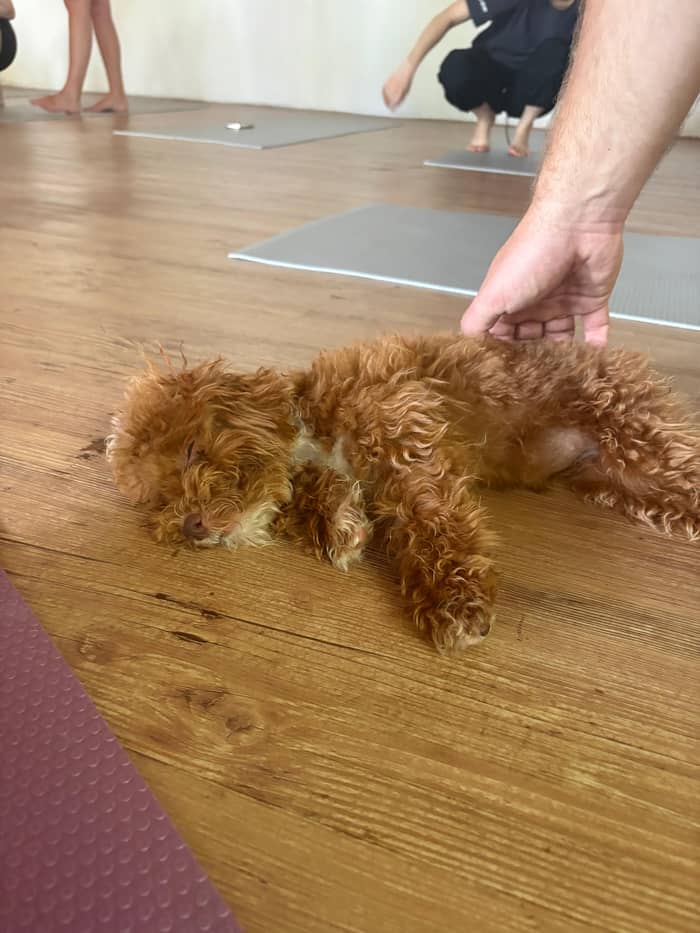
Ubud and Uluwatu
The class this site books
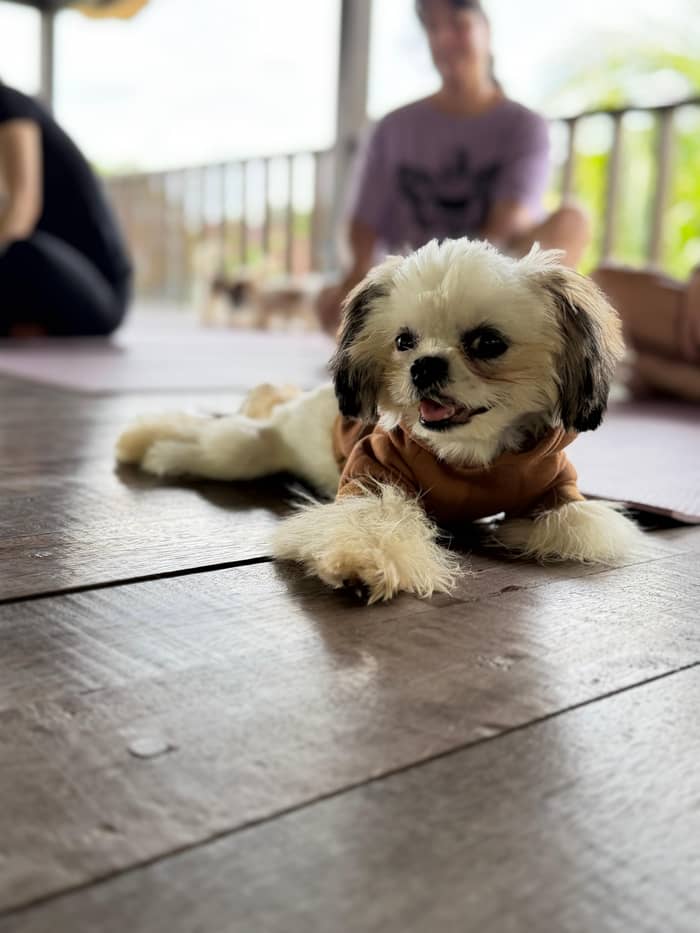
Canggu and Uluwatu
A class that names its sources

Ubud yoga hour
Yoga with no animals
The listing for the Canggu and Uluwatu class is the clearer one. It says the puppies are not the provider's own, that they come from animal protection associations or partner family breeders, and that they are being socialised before they join their permanent families. It also says part of each ticket goes to an animal protection association.
The listing for the Ubud and Uluwatu class, the one this site books, states that 10 percent of ticket sales go to shelters and puppies in Bali. It does not say where the puppies come from, and we found no operator statement that does. That gap is the first question to put to the organiser, and we would not book without hearing the answer.
Two other lines matter. The Canggu and Uluwatu listing keeps children under 16 out of a regular session and under 18 out of a rescue session. The Ubud and Uluwatu listing welcomes children aged 6 and up. Both are organisers' rules, not welfare standards, and neither tells you how often a puppy is rested.
Weigh the costs
Enter how many are going and compare the two puppy classes with a no-puppy yoga hour.
Line up 3 options
Enter how many are going and compare the two puppy classes with a no-puppy yoga hour.
≈
View≈
View≈
ViewLowest GetYourGuide fares converted at the ECB rate; the exact total is shown at checkout.
Questions in the right order
In the listing text
Look for a statement of where the puppies come from; the Canggu and Uluwatu listing has one.
Before you book a mat
Ask the organiser about age, vaccination and how long each puppy works. The Ubud and Uluwatu listing shares a WhatsApp route for younger guests.
Right at the entrance
SPCA New Zealand says rest areas should let animals escape contact with humans.5
During the class
Free water and supervision are on SPCA New Zealand's list.6,4
Afterwards
Tell the organiser, and the platform, about anything that looked wrong.
The word rescue is doing a lot of work in this market. A rescue session on one listing implies animals taken in from the street or from unsuitable homes, and the listing speaks of puppies being socialised before moving to families. That can be true and still leave the question of what the sessions cost the animal.
Bali's own animal welfare charity gives context. BAWA reports more than 9,000 rabies vaccinations a year, counted for 2023, and says adopting a rescued animal is an act of kindness.15,12 It also says the choices a visitor makes in Bali can prolong or prevent animal suffering.16 That sentence cuts both ways for a tourist booking puppy yoga.
If you want the money to reach animals, ask the organiser for the name of the shelter and, where you can, give to the shelter directly. A percentage of a ticket is a nice gesture, but a donation you control is clearer.
Video
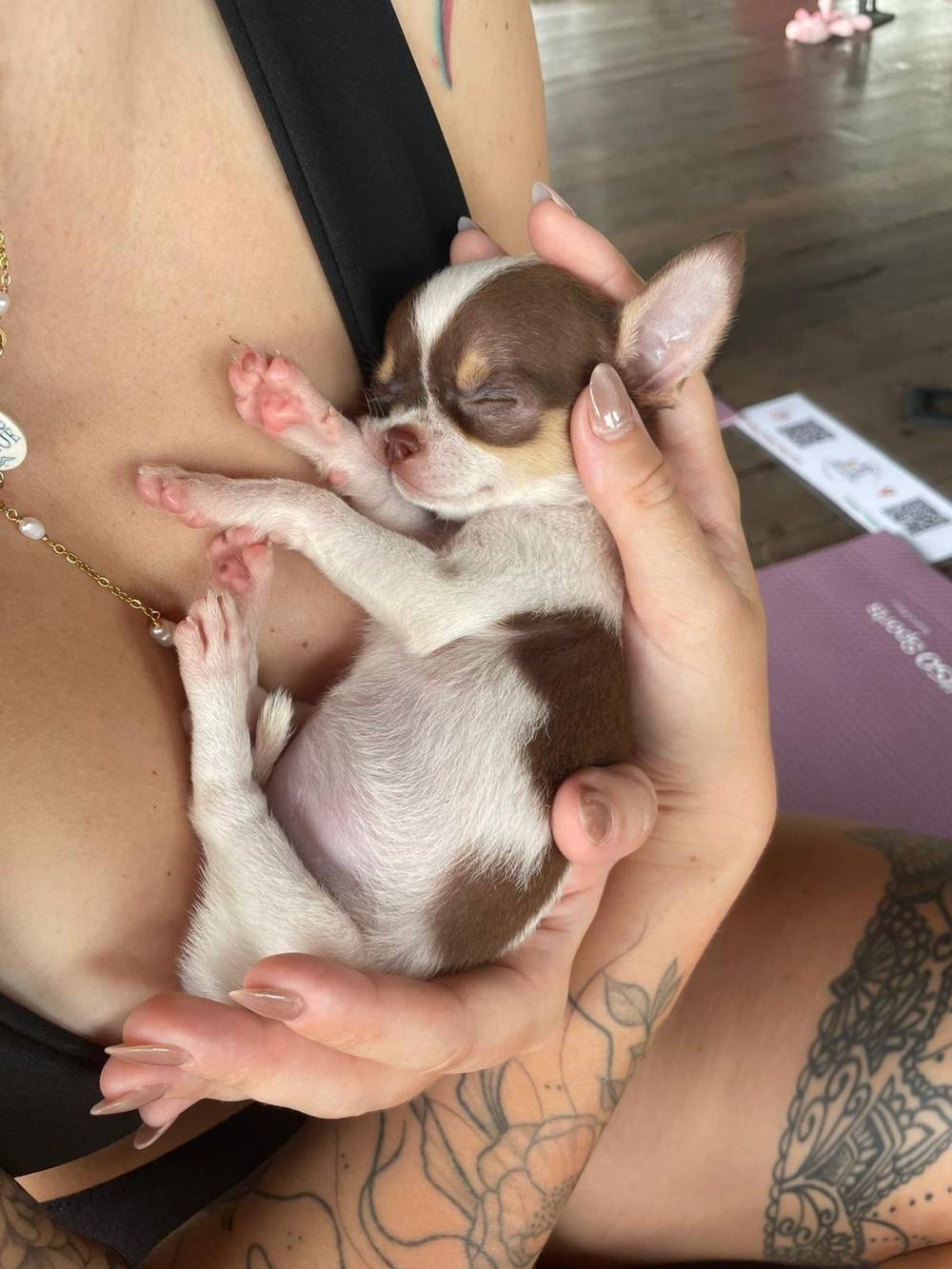
ITV News on YouTube · Playback begins only when you press the button.
Animals should be properly assessed for suitability for the programme, supervised at all times, and have the choice of participation in the event
The ethics of a class include the guests. The CDC says dogs infected with rabies are commonly found in Indonesia, and its advice to travelers is to avoid unfamiliar dogs and cats and never touch or feed animals they do not know.17,18,19 A class is a managed setting, yet a scratch is still a scratch.
If skin is broken, WHO says to wash the wound with water and soap for at least 15 minutes and seek medical attention, and the CDC says rabies vaccines are typically available throughout most of Indonesia.20,21 Children are the group to watch: WHO says 40% of rabies deaths are children under 15.11
Ask the organiser whether the puppies are vaccinated and ask your own doctor whether you need pre-travel vaccination. The listing also asks guests to report allergies or health concerns, especially to pets, so use that opening honestly.
Skipping puppy yoga costs you nothing. RSPCA Australia suggests that people who want contact with animals can volunteer for a shelter or rescue program, which it says can bring genuine wellbeing benefits without placing young animals in distressing situations.13 In Ubud that might mean an afternoon at a shelter instead of a class, and BAWA's public pages describe adopting a rescued animal as an act of kindness.12
If it is the yoga you want, Ubud has a lot of it. The guide to yoga classes in town covers the big studios, their schedules and the prices they publish, and a plain class remains the easiest way to enjoy a hot morning with nothing at stake but your hamstrings.
And if you decide to go ahead, go as a considerate guest: sit down, let the puppies choose you, hand a tired one back, and tell the staff if something looks wrong. That is the standard we would hold ourselves to.
FAQ
RSPCA Australia reports the ban and notes only adult dogs may join animal-assisted wellbeing activities there.3
One listing names animal protection associations or partner family breeders, while the Ubud and Uluwatu listing gives no origin.
The Ubud and Uluwatu listing names 10 percent of ticket sales, and the Canggu and Uluwatu listing says part of each ticket.
The CDC says dogs infected with rabies are commonly found in Indonesia, and the listings we hold do not state the puppies' vaccinations.17
RSPCA Australia suggests volunteering for a shelter or rescue program.13
Sources
Keep reading
Questions about the puppies or the class? A person answers here.